

Warrenpoint is located on the northeast coast of Ireland and at the head of the Carlingford Lough inlet. It is a small commercial port that provides visiting boats with pontoon berths, the possibility to anchor close offshore with good landing points and several good options for vessels that can take to the ground.
The port offers complete protection. Pilotage up to Warrenpoint is straightforward via a deep water shipping channel that runs the entire length of the lough making the port accessible at night or day in all reasonable conditions. Although well marked, access and piloting require good charts and visibility owing to exceptional currents in the entrance area where they attain 5 knots. As a particular consequence of this, the entrance should be timed to be around slack water, and the vessel should be equipped with a reliable engine.


Keyfacts for Warrenpoint


Last modified
October 26th 2023 Summary* Restrictions apply
A completely protected location with careful navigation required for access.Facilities


Nature


Considerations


HM  +44 28 41773381
  info@warrenpointharbour.co.uk
  warrenpointharbour.co.uk
  Ch.12 [Warrenpoint Harbour Radio]
+44 28 41773381 info@warrenpointharbour.co.uk warrenpointharbour.co.uk Ch.12 [Warrenpoint Harbour Radio] Position and approaches

Expand to new tab or fullscreen
Haven position
 54° 5.770' N, 006° 15.220' W
At the south end of Warrenpoint Breakwater where a light Fl. G 3s stands.
What is the initial fix?
The following Carlingford Lough Entrance Initial Fix will set up a final approach:
 54° 0.100' N, 006° 2.052' W

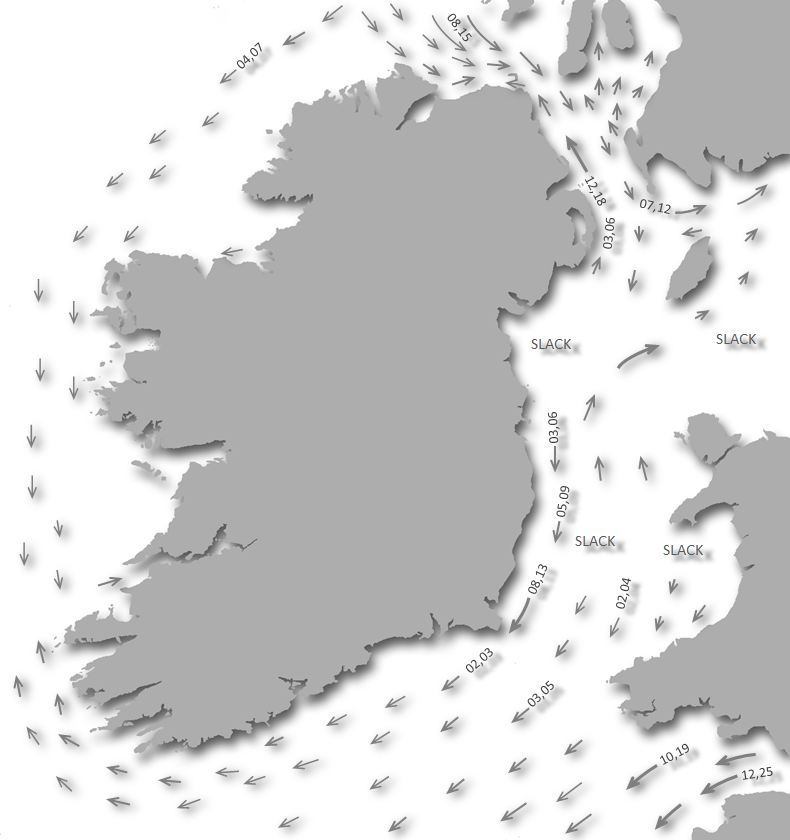


What are the key points of the approach?
Offshore details are available in eastern Ireland’s Coastal Overview for Strangford Lough to Dublin Bay  .
.
.- Plan the approach to be at slack water, preferably low water. Tides in the entrance attain rates of up to 5 kn making it virtually impossible for a displacement leisure craft to enter or leave against the tide.
- From the entrance follow the well-buoyed and lit commercial channel up the length of the inlet.
- Carlingford Lough's entrance channel and the dredged channel to Warrenpoint are both narrow where sailing vessels of less than 20 metres in length cannot impede ships in transit.
- Contact Warrenpoint Harbour Radio using VHF Channel 12 for permission to proceed prior to arriving at the Starboard No. 27 Buoy.
Not what you need?
Click the 'Next' and 'Previous' buttons to progress through neighbouring havens in a coastal 'clockwise' or 'anti-clockwise' sequence. Below are the ten nearest havens to Warrenpoint for your convenience.
Ten nearest havens by straight line charted distance and bearing:
- Omeath - 0.3 nautical miles SSE
- Greer’s Quay - 1.5 nautical miles SSE
- Rostrevor - 2.3 nautical miles ESE
- Killowen - 2.6 nautical miles ESE
- Carlingford Marina - 3.5 nautical miles SE
- Carlingford Harbour - 4.1 nautical miles SE
- Newry - 5.2 nautical miles NW
- Greencastle - 6.4 nautical miles ESE
- Giles Quay - 6.7 nautical miles S
- Dundalk - 7.1 nautical miles SW
These havens are ordered by straight line charted distance and bearing, and can be reordered by compass direction or coastal sequence:
- Omeath - 0.3 miles SSE
- Greer’s Quay - 1.5 miles SSE
- Rostrevor - 2.3 miles ESE
- Killowen - 2.6 miles ESE
- Carlingford Marina - 3.5 miles SE
- Carlingford Harbour - 4.1 miles SE
- Newry - 5.2 miles NW
- Greencastle - 6.4 miles ESE
- Giles Quay - 6.7 miles S
- Dundalk - 7.1 miles SW


What's the story here?
 Warrenpoint at the head of Carlingford Lough
Image: Michael Harpur
Warrenpoint, locally known as The Point, is a small commercial town and port that forms the east side of the entrance to Newry River at the head of Carlingford Lough. The narrow strait separates Northern Ireland from the Republic of Ireland and as such, the sizable town of about 9,000 people is located in Northern Ireland. At its western end, it presents a large industrial harbour to the river whilst presenting a Victorian resort town to the head of Carlingford Lough.
 Visiting boats alongside the pontoon inside the southeast breakwater
Image: Tourism NI
The town offers pontoon berths in two locations, inside its southeast breakwater and within the Town Dock. The area immediately alongside the pontoon placed against the inner side of the breakwater is dredged to a depth of 1.1 metres LWS.
.jpg) The port of Warrenpoint and the Town Dock (right)
The port of Warrenpoint and the Town Dock (right)Image: Michael Harpur
The Town Dock, at the northwest end of the basin, is available during the summer months when it is vacated by a fleet of shellfish boats that only harvest during the winter months. The outer fingers of the pontoon has 2 metres LAT but the largest part of the inner pontoon dries. It has four to five visitor berths that support 2 metres LWT.
 Yachts in the Town Dock
Image: Michael Harpur
It is possible to anchor directly off the end of the breakwater and land at its pontoon. This is a completely protected area although subject to scend from the occasional passing commercial vessel. Warrenpoint is ideal for bilge and lifting keel vessels that can take to the ground out of the way of the pontoon and commercial traffic. Vessels that can take to the hard have a wide range of options to dry out in the soft muds.
 Yachts berthed in the Town Dock
Image: Michael Harpur
Berthing arrangement should be made in advance or at the latest when approaching the entrance channel by contacting Warrenpoint Harbour Authority on
Ch. 12 [Warrenpoint Harbour Radio] (24 hrs.), +44 (0)28 417 73381. It is advisable to check that no large ships are about to depart the port as vessels may not pass each other in the confines of the dredged channel. How to get in?

 Carlingford Lough as seen from the northwest above Warrenpoint
Image: Tourism Ireland
Situated between the lower slopes of the Mountains of Mourne and the Cooley Mountains, Carlingford Lough is 8 miles long in a northwesterly direction, with a breadth varying from 1 to 2 miles. It makes for a beautiful expanse of water with lots of varied berthing opportunities that have long been enjoyed by leisure vessels.
 Haulbowline Lighthouse in middle of the entrance to Carlingford Lough
Image: Graham Rabbits
Navigation is easy as there is a lighthouse in the middle of the Lough's entrance and the well-marked, regularly dredged, deepwater commercial channel's first marks commence nearly 2 miles too seaward of it. From there it stretches the length of the Lough to Warrenpoint carrying sufficient depth for the largest ships all the way.
The key point to factor into any planned visit to Carlingford Lough is that it is very difficult for a displacement leisure vessel to enter or leave against its tides. Spring velocity in the entrance, around the Haulbowline Rocks, attains speeds of 5 knots.
Newcomers are therefore best advised to approach at slack water. As the slack water period between two tides at the Lough entrance is very short, and only happens twice a day, possibly once in daylight, it may be best to stage the visit to the Lough by staying in a convenient local haven to set up an optimum time entry.
It is also worth noting that during northwest winds, the inlet is subject to heavy squalls that descend from the hills and, owing to the funnelling effect of the mountains, expect the northwest wind strength to be double what is forecasted. As such, during strong north-westerlies, Warrenpoint and Carlingford Lough Marina are the only places that will be comfortable.
 Fishing for Oysters & Mussels in Carlingford Lough
Image: Tourism Ireland
Fish farming is widespread within the lough area and the locations are well marked on the charts. However, Carlingford's farming is more orientated towards shellfish beds than that of fish cages so they are more of a concern for anchoring than navigation.
Finally, all vessels moving within the limits of Warrenpoint Harbour, above Starboard No. 27 Buoy which is 1 mile below the town breakwater, fall under the control of the Warrenpoint Harbour Master who requires the following:
- • Contact Warrenpoint Harbour Radio using VHF Channel 12 for permission to proceed prior to arriving at this mark.
- • Maintain a listening watch on VHF Channel 12 when operating within the Limits of Warrenpoint Harbour.
- • Do not transit under sail and take care not to impede commercial traffic in the Warrenpoint channel. Commercial vessels will be channel bound, have right of way, and have no capability to manoeuvre.
- • Avoid crossing the bows of on-coming commercial traffic.
- • When the channel must be crossed this should be done as near as practicable to right angles. Warrenpoint Harbour Radio should be contacted prior to crossing.
 Haulbowline Lighthouse
 Image: Eric Jones via CC BY-SA 2.0
 Seaward approaches are detailed in eastern Ireland’s coastal overview for Strangford Lough to Dublin Bay . The mountains at the upper part of the lough may attain heights of from 300 to 600 metres but the land at the entrance is low. The low ingress is nevertheless easily identified from seaward by being framed between the Cooley Mountains on the southern side and the Mountains of Mourne appearing in the upper part of the Lough. On the shoreline, the entrance is situated between Ballagan Point and Cranfield Point, 2 miles to the northeast, and is almost entirely blocked by rocks and shoals that extend across the mouth of the Lough. At the centre of this stands the conspicuous 34-metre high grey granite Haulbowline Lighthouse.
 Haulbowline Lighthouse - Fl (3) W10s 17M position: 54° 01.196’N, 006° 04.740’W
Close northeast of the lighthouse is the Carlingford Cut, the main entrance channel that the lighthouse marks. It lies between the foul ground off Cranfield Point and the Limestone Rock shoals extending out to Haulbowline Lighthouse. A fairway through the cut is dredged to a depth of 6.3 metres. It is marked by lighted buoys on each side and indicated by range lights.
 Hellyhunter south cardinal buoy
Image: Graham Rabbits
 The initial fix is 500 metres due south of Hellyhunter, a south cardinal buoy Q(6) +FL1.15s situated a ½ mile south of Hellyhunter Rock.
 Hellyhunter South Cardinal - Q (6) + LFl 15s position: 54° 00.351'N 006° 02.052’W
This buoy is situated about 1½ miles southeast of Cranfield Point the northwestern side of the entrance to Carlingford Lough. From here the line of the entrance’s leading light beacons may be picked up.
 Leading marks and Haulbowline Lighthouse as seen from Greencastle
Image: Michael Harpur
From the initial fix approaching the Carlingford Cut on 310° T to the first channel marks close southward of Greencastle. At night the leading lights will just become visible at this range, Oc.3s7m13M.
 Rear leading light tower off the northeast shore within the entrance
Image: Jay Ken Crozier via CC BY 2.0
Then it is a matter of following the well-marked mooring buoys up to the Warrenpoint entry channel; odd numbers to starboard and even to port. Once inside the entrance, the waters are completely absent of swell making marker identification easy. Once inside the buoyed channel continue between the marks until the No. 6 port hand mark is passed when the Haulbowline Lighthouse is abeam to port.
 The channel into Carlingford Lough within Haulbowline Lighthouse
Image: Auris Photography
Haulbowline Rock, on which the lighthouse stands, covers on the first quarter of the flood and dries to 1.2 metres. The lighthouse marks the west side of the entrance channel and lies about a ½ mile west by southwest of Cranfield Point. It is surrounded by rocky prongs. One of these is situated about 200 metres northeast by north of the lighthouse and it dries at low water. Another rock with 1.1 metres of cover lies 200 metres east-northeast of Haulbowline lighthouse.
When the lighthouse is abreast to port, and No.5 starboard hand buoy is off Cranfield Bay on the opposite side, the course alters slightly to port taking a path towards Greenore Point. This is situated on the Lough’s southern shore and made conspicuous by a pine plantation with some buildings including an old lighthouse. This leg takes a vessel to the north of the extensive rocky flat Block House Island, part of which is always exposed, and to the south of New England Rock and Vidal Rock.
 Haulbowline Light and Block House Island
Image: NOAA's National Ocean Service via CC BY 2.0
This broad rocky flat of Block House Island guards the entrance to Carlingford Lough. It is nearly covered at high water but its northern shore is steep-to. A military building was erected here in 1602, now entirely ruined, and was known as Carlingford Fort. Within this, on the inner edge of the Limestone Rocks, is the Sheep Rock that uncovers on last quarter ebb about a ¼ of a mile west of this is a yellow special marker buoy.
From just within to the westward from this buoy, up to Greenore Point, the western shore of the lough is covered by extensive flats where there is extensive marine aquaculture. These uncover at low water and are steep-to, as does Greenore Point.
Off the northeastern shore, between the No. 5 and No. 7 starboard marks, the latter marking the New England Rock with 1.5 metres over it, the path passes Soldiers Point on the northern shore. This is located about ¾ of a mile to the northwest of the northeastern entrance point Cranfield Point. A gravel spit, which dries, extends about 0.3 of a mile southeast from the point and is called The Scar. This lies in front of Cranfield Bay and is dry at low water and steep-to.
 The Carlingford Lough Ferry passing through this open body of water
Image: Michael Harpur
From Soldiers Point to Greencastle Point, located about 1.1 miles to the northwest, the shore between is fronted by a flat which dries out to a distance of about ⅓ of a mile and is steep-to. The towers that host the entrance's leading lights are positioned on the outer extremity of this drying area. A prominent ruined castle, Green Castle stands at Greencastle Point.
 Greencastle with its ferry pier and wooden piers
Image: Michael Harpur
The No. 7 starboard hand marks Vidal Rock with 1.1 metres of cover, and the No. 11 nearly a mile away westward, recommences to the southwest of Green Island. This is a small 2.7-metre high islet a ½ mile from the Greencastle shore. It is surrounded by an extensive rocky foreshore with outlying rocks to the east. Between this and the shore, there is a narrow but deep channel where the very good haven of Greencastle
 can be found.
 Greencastle Pier with the range marks and Haulbowline Lighthouse in the backdrop
Image: Jay Ken Crozier via CC BY 2.0
From just within to the westward from this buoy, up to Greenore Point, the western shore of the lough is covered by extensive flats where there is extensive marine aquaculture. These uncover at low water and are steep-to, as does Greenore Point.
 Carlingford Lough Ferry, Greenore and Green Island
Image: Tourism Ireland
The car ferry service sails on the hour crossing Carlingford Lough from Greencastle to Greenore. From Greencastle it departs on the hour (Mon-Sat 7 am–8 pm, Sun 9 am–8 pm) From Greenore, ferries depart on the half-hour (Mon-Sat 7.30 am–8.30 pm, Sun 9.30 am–8.30 pm) and the crossing takes 15 minutes. It is important not to obstruct the channel or its approaches when it is manoeuvring.
 Entering yacht passing behind Green Island as seen from Greencastle
Image: Jay Ken Crozier via CC BY 2.0
In this area just within the entrance, between Green Island, Greenore Point, The Yellow Buoy, Sheep Rock and Block House Island, there is a clear open space.
 Greenore
Image: Michael Harpur
Greenore Point is located about 2½ miles northwest of Ballagan Point. The tower of a disused light, 12 metres high, is prominent. The privately-owned Greenore Harbour lies close west of Greenore Point and a regular container ferry service uses the port.
 The channel westward of Green Island
Image: Michael Harpur
The channel to the upper part of the Lough passes close northeast of the point and recommences after this space to the westward of Green Island. Off the eastern shore to the northward of Green Island and opposite Grenore Point, there is a series of dangers extending for nearly a mile towards the Stalka Rock. These all lie to the east of starboard hand marks No.11 through to No.19. The first and southernmost of these are Frazer Rock with 0.7 metres of cover close to the No.13 Buoy.
 No. 12 Buoy and Earl Rock opposite Greenore Point
Image: Michael Harpur
Earl Rock dries at low water and is 600 metres east by north from Greenore Point. It is marked by a 6-metre high beacon on its southern end. Midway between it and Frazer Rock are unnamed rocks with 0.2 and 0.3 metres of water.
Stalka Rock is a ½ mile north by west of Earl Rock. It uncovers an hour before low water and is marked by a perch. A ridge of sand, uncovered at low water, connects these rocks, and continues to the north of the Stalka. Within, or between this ridge and the great eastern banks, there is a clear channel about 200 to 400 metres wide with from 6 to 7 metres of water. It extends down to the anchorage inside Green Island and is often used by local vessels passing between Green Island and Warrenpoint.
 The Lough above Grenore Point
Image: Michael Harpur
Above Greenore Point the channel runs between two extensive rocky shoals, called Watson and Stalka Rocks, for about a ½ mile. Above these continue through the middle of the lough in a north by northwest direction for about 3 miles, maintaining an average width of about 600 metres, and which is bounded by extensive sandbanks that line both shores.
 Carlingford Pier with Greenore in the backdrop
Image: Tourism Ireland
Off the western shore to the north of Greenore are the Watson Rocks. Port hand markers No. 14 through to No.16 carry a vessel past these dangers. Watson Rocks have 0.7 metres of water and form the southern portion of an extensive bank. This bank runs in a northwest-by-north direction for more than a ½ mile and carries from 1.8 to 2.7 over its northern end. Black Rock, on the outer edge of the stony foreshore and a ½ mile from the western side, is covered at half-tide and dries to 2.7 metres. From Black Rock, the edge of the bank runs in a northwest direction for 1¾ miles terminating before the No. 18 port hand buoy on the north spit of Carlingford Bank.
 Carlingford Harbour
Image: Michael Harpur
The Carlingford Bank is the portion of the western bank in front of the town of Carlingford, its outer edge dries and is steep-to and there is 0.6 or 1.6 metres of water between it and the shore. To the north of the Carlingford Bank the western shore is skirted by a flat with 2.2 or 2.7 metres of water, extending to a distance of about 600 metres off, that affords a good anchorage for leisure vessels.
 Carlingford Marina
Image: Michael Harpur
Immediately inshore there is the Carlingford Marina
or the potential to dry out alongside Carlingford Harbour’s pier.
 The view south-eastward from Killowen Point towards Greenore
 Image: Michael Harpur
Opposite the Carlingford Bank is Killowen Bank which bounds the eastern side of the channel. The No. 23 starboard hand buoy marks its outer edge. The Killowen Bank uncovers from the shore out to the buoy and has extensive fish farming activity within the area.
 Killowen Point and its drying shoal
Image: Michael Harpur
The Starboard No. 23 buoy marks the Killowen Bank with a western extension of the bank being marked by the yellow Killowen Bank Special Mark Buoy Fl.Y.5s. Killowen Point has a terrace of shelly gravel that extends from it and dries to more than 4 metres.
 The well appointed Carlingford Lough Yacht Club clubhouse
Image: Michael Harpur
About 1 mile to the northwest of Killowen Point, at the foot of the forested Slieve Martin where the Mountains of Mourne terminate, there is the well-established Killowen
anchorage where moorings and the facilities of the Carlingford Lough Yacht Club may be availed of.  The Ross Monument obelisk overlooking Rosstrevor Bay
Image: Michael Harpur
The narrowest part of the channel is between the Killowen and Carlingford banks where it is about 600 metres wide. A little above Killowen Point the deep channel terminates and is succeeded by a broad expanse of shallow water that occupies the whole head of the lough to Warrenpoint, with scarcely a third of a metre of depth difference across from shore to shore.
 Yacht anchored offshore of the historic Wood House
Image: Michael Harpur
In Rostrevor Bay
there is from 2.2 to 2.8 metres, shoaling to 1.5 to 0.9 metres off Warrenpoint, the whole of which provides an excellent anchorage with perfect shelter from all winds and sea. However, the 'Carlingford Lough Marine Conservation Zone' (Carlingford Lough MCZ)  has been established over the bulk of the area between Rostrevor the ship channel all the way into Warrenpoint. Anchoring should be avoided in this area but it is just possible to anchor immediately outside and a ½ mile northwestward of Killowen Point and offshore of the historic Wood House set on the foot of the mountain here.
 Greer’s Quay
Image: Michael Harpur
Or alternatively, anchor off the southern shore at Greer’s Quay
or Omeath . Omeath
Image: Michael Harpur
The No. 25 starboard buoy, situated in the southwest corner of Rostrevor Bay, marks the entrance to the buoyed Warrenpoint approach channel which is dredged to a depth of 5.4 metres. The cranes at the commercial berths will have been visible for some time beforehand during the run-up the Lough.
No. 25 Green Light buoy – Fl. G 3s position: 54° 04.200’N, 006° 12.100’W
.jpg) The Newry River Leading Lights set above the port (left)
The Newry River Leading Lights set above the port (left)Image: Michael Harpur
From the light buoy, it is a distance of 2½ miles to the town via the 60 metres wide channel that is well marked with lighted buoys. It is also covered by the Newry River Leading Lights set above the port in two round towers, that lead through the centre of the channel lights in line at 310° T.
 The Newry River Leading Lights round towers
Image: Tourism Ireland
The dredged channel has 5.4 metres to the container berths but it shallows rapidly on either side. Moderate draft vessels will find good depth with a half tide up as far as the Gunnaway Rock which is marked by a starboard pole beacon. It covers on the first quarter flood, dries to 3 metres, and is close to the northeast of the channel about 600 metres south by southeast from Warrenpoint. Between it and the point are some rocks that uncover at low water.
 Warrenpoint with its prominent breakwater at the head of the inlet
Image: Michael Harpur
Black Rock on the opposite shore, marked by a perch and covered at 3 hours flood, is on the outer edge of the stony foreshore that borders the southwestern side of the Lough.
 The pontoon attached to the inner side of the breakwater
 Image: JMC Aerial Media
Upon arrival berth as arranged with the Harbour Master. The area immediately alongside the pontoon's inner side of the southeast breakwater is dredged to a depth of 1.1 metres LAT and the remainder of the harbour area adjacent to the pontoon dries. So vessels should come straight in and out alongside the pontoon as the access path is only 20 metres wide. Visiting boats should use the inner half of the pontoon, leaving the outer part for the ferries to Omeath in the Irish Republic.  Leisure craft anchored off Warrenpoint
Image: Michael Harpur
It is possible to anchor directly off the end of the pontoon. It is completely protected here although subject to scend from the occasional passing commercial vessel.
.jpg) Warrenpoint's Town Dock (left)
Warrenpoint's Town Dock (left)Image: Michael Harpur
The Town Dock is in the older part of the harbour close upriver, at the northwest end of the basin. Warrenpoint is ideal for bilge and lifting keel vessels that can take to the ground out of the way of the pontoon and commercial traffic.
 Pontoon in the Town Dock
Image: Michael Harpur
It has a very muddy bottom at low water and ground tackle should have a trip line as there are sixty years of old moorings in this area that could potentially foul an anchor.
 The RoRo Terminal and container berths upriver of the Town Dock
Image: Michael Harpur
Upriver and abreast the town is the RoRo Terminal and a container berth. The harbour master may give permission to temporarily use a general cargo berth. These are not suitable for leisure vessels because of the distance between the widely spaced vertical timber fenders.
 The Town Dock
Image: Daniel Morrison via CC BY 2.0
The town of Newry
can be reached by way of a canal accessed via a single lock near the Warrenpoint Port at high water. Berthing in Newry is alongside the town quay. The essential first step for any planned visit to Newry is to contact Newry Tourist Information to obtain approval. Why visit here?
It is believed Warrenpoint derives its name from a family that lived here around the latter half of the 18th century. The Waring family lived here in a house called Waring’s Point and the name came to describe the location. The Irish place name is Rinn Mhic Ghiolla Rua which translates to 'McIlroy's Point' and can still be seen on some maps. It has been shortened to the commonly used name 'An Phointe' simply 'The Point'. Warrenpoint port as depicted in the 1800s
Image: Public Domain
 Victorian Warrenpoint
Image: National Library of Ireland on The Commons
The town's commercial port was just as successful. The original Port of Warrenpoint, consisting of a wet dock and piers, was constructed by Roger Hall, Robert Ross and Isaac Corry. In the early 1900s the port was sold on and expanded again. It was later sold to Warrenpoint Port and was enlarged again in 1972 – 1974. Warrenpoint Breakwater was added at this stage to provide the harbour with increased protection and a welcome addition to the town’s promenade. After this redevelopment, it took over the trade of the port of Newry situated 5 miles inland when it closed in the 1970s. In its time thousands of emigrants passed out of Ireland from these docks in search of a new future. On the corner of the dock, a plaque can be found commemorating their departure.
 The Bandstand was set in place in 1908
Image: National Library of Ireland on The Commons
It was after the redevelopment that Warrenpoint will remembered for being at the centre of tragedy during Northern Ireland's 'Troubles'. In 1979 the IRA proved that it was well organized and well-armed, and capable of sustaining a terrorist campaign indefinitely by the occasional spectacular act. One of these was the murder of Lord Mountbatten and three others assassinated by IRA at Mullaghmore, County Sligo. On the same day, they ambushed a British Army convoy near Warrenpoint's Narrow Water Castle. Eighteen soldiers were killed in the Warrenpoint ambush and it represents the British Army's greatest loss-of-life in a single incident during the conflict. Yet it is the strategic location set on the border of Northern Ireland and the Republic of Ireland continues to help the port thrive to the present day. Warrenpoint Port is only second in terms of tonnage handled by ports in Northern Ireland.
 Victorian Postcard of the Espanade
Image: Public Domain
Today Warrenpoint is a busy and prosperous town that is thought to be one of the best-planned in Ireland. The town is compact and attractive with neat Victorian buildings and broad streets. It has an animated waterfront, and a long promenade and port forming the interface between the town centre and Carlingford Lough. The historic core of the town is apparent with the town square forming the centre of the town. Within the town centre there is a public open space which is used mostly as a car park but also for fetes, occasional markets and festivals; most notably the 'Maiden of the Mournes' festival and the 'Blues on the Bay' music festival.
 Narrow Water Castle at sunrise
Image: Richard Browne via CC BY 2.0
With its beautiful Municipal Park and promenade, quaint shops, restaurants and many different pubs and clubs, Warrenpoint is a joy to explore. Of particular note are the two and three-storey 'Seaview Terraced Houses', along Seaview. These individual buildings have architectural merit but their combined effect is a sense of Victorian quality and grandeur that speaks of the town’s past as a resort. Set at the foot and with distant views of the Mourne Mountains, Cooley Mountains and with views over Carlingford Lough it is readily apparent what elicited their development. A hike of about 2km to the northwest of the town centre, beyond the port area, takes a visitor to the Narrow Water Castle. This is a fine Elizabethan three-storey garrison tower house built in 1568 to command the entrance to the River Newry.
 Warrenpoint presenting its Victorian resort face to the head of Carlingford
Lough
Image: Tourism Ireland
Hiking is in fact the finest way to see this beautiful area as it has many trails particularly up into the Mourne Mountains. Be aware that the word walk is used instead of hike which can mean anything from a gentle ramble to a tough scramble over boulders here so it is advisable to ask for specifics from the Mourne Heritage Trust in the Town Hall on Church Street in Warrenpoint.
 Tall Ship exiting past the Town Quay
Image: Daniel Morrison via CC BY 2.0
The centre is open most days during the summer offering all sorts of maps and information, plus a series of talks on various facets of the area and guided weekend hikes. Any appetite that the countryside develops will be well catered for in the town's first-rate dining that can be had in its many restaurants and gastropubs.
 A picturesque berth at the head of Carlingford Lough
Image: Tourism Ireland
From a boating point of view, Warrenpoint offers a very safe and convenient harbour in a scenic location. It is one of Carlingford Lough’s key locations that has long enjoyed popularity with holidaymakers and sailors alike for more than 100 years. It also offers excellent convenient provisioning, transport links and an ideal staging point for those awaiting a tide to access the canal to Newry
. Should the northeasterlies blow it provides the best shelter in the Lough. What facilities are available?
Fuel is available by road tanker, fresh water at the quays; and with a population of approximately 7,000 provisions are plentiful, and minor repairs can be undertaken here. The port has excellent road links to the major population centres of Ireland. International air services are available from Belfast airport 96 km.Useful transport contacts in this area:
Dundalk Train Station + 353 42 933 5521
Dundalk Bus Station + 353 42 9334075
Newry Bus Station + 44 28 30623531
Newry Train Station + 44 28 30269271
Any security concerns?
Never an issue known to have occurred at Warrenpoint.With thanks to:
Brian McJury, Warrenpoint Harbour Master.Northern Ireland tourist board overview
About Warrenpoint
It is believed Warrenpoint derives its name from a family that lived here around the latter half of the 18th century. The Waring family lived here in a house called Waring’s Point and the name came to describe the location. The Irish place name is Rinn Mhic Ghiolla Rua which translates to 'McIlroy's Point' and can still be seen on some maps. It has been shortened to the commonly used name 'An Phointe' simply 'The Point'.
Warrenpoint port as depicted in the 1800sImage: Public Domain
Victorian WarrenpointImage: National Library of Ireland on The Commons
The town's commercial port was just as successful. The original Port of Warrenpoint, consisting of a wet dock and piers, was constructed by Roger Hall, Robert Ross and Isaac Corry. In the early 1900s the port was sold on and expanded again. It was later sold to Warrenpoint Port and was enlarged again in 1972 – 1974. Warrenpoint Breakwater was added at this stage to provide the harbour with increased protection and a welcome addition to the town’s promenade. After this redevelopment, it took over the trade of the port of Newry situated 5 miles inland when it closed in the 1970s. In its time thousands of emigrants passed out of Ireland from these docks in search of a new future. On the corner of the dock, a plaque can be found commemorating their departure.
The Bandstand was set in place in 1908Image: National Library of Ireland on The Commons
It was after the redevelopment that Warrenpoint will remembered for being at the centre of tragedy during Northern Ireland's 'Troubles'. In 1979 the IRA proved that it was well organized and well-armed, and capable of sustaining a terrorist campaign indefinitely by the occasional spectacular act. One of these was the murder of Lord Mountbatten and three others assassinated by IRA at Mullaghmore, County Sligo. On the same day, they ambushed a British Army convoy near Warrenpoint's Narrow Water Castle. Eighteen soldiers were killed in the Warrenpoint ambush and it represents the British Army's greatest loss-of-life in a single incident during the conflict. Yet it is the strategic location set on the border of Northern Ireland and the Republic of Ireland continues to help the port thrive to the present day. Warrenpoint Port is only second in terms of tonnage handled by ports in Northern Ireland.
Victorian Postcard of the EspanadeImage: Public Domain
Today Warrenpoint is a busy and prosperous town that is thought to be one of the best-planned in Ireland. The town is compact and attractive with neat Victorian buildings and broad streets. It has an animated waterfront, and a long promenade and port forming the interface between the town centre and Carlingford Lough. The historic core of the town is apparent with the town square forming the centre of the town. Within the town centre there is a public open space which is used mostly as a car park but also for fetes, occasional markets and festivals; most notably the 'Maiden of the Mournes' festival and the 'Blues on the Bay' music festival.
Narrow Water Castle at sunriseImage: Richard Browne via CC BY 2.0
With its beautiful Municipal Park and promenade, quaint shops, restaurants and many different pubs and clubs, Warrenpoint is a joy to explore. Of particular note are the two and three-storey 'Seaview Terraced Houses', along Seaview. These individual buildings have architectural merit but their combined effect is a sense of Victorian quality and grandeur that speaks of the town’s past as a resort. Set at the foot and with distant views of the Mourne Mountains, Cooley Mountains and with views over Carlingford Lough it is readily apparent what elicited their development. A hike of about 2km to the northwest of the town centre, beyond the port area, takes a visitor to the Narrow Water Castle. This is a fine Elizabethan three-storey garrison tower house built in 1568 to command the entrance to the River Newry.
Warrenpoint presenting its Victorian resort face to the head of CarlingfordLough
Image: Tourism Ireland
Hiking is in fact the finest way to see this beautiful area as it has many trails particularly up into the Mourne Mountains. Be aware that the word walk is used instead of hike which can mean anything from a gentle ramble to a tough scramble over boulders here so it is advisable to ask for specifics from the Mourne Heritage Trust in the Town Hall on Church Street in Warrenpoint.
Tall Ship exiting past the Town QuayImage: Daniel Morrison via CC BY 2.0
The centre is open most days during the summer offering all sorts of maps and information, plus a series of talks on various facets of the area and guided weekend hikes. Any appetite that the countryside develops will be well catered for in the town's first-rate dining that can be had in its many restaurants and gastropubs.
A picturesque berth at the head of Carlingford LoughImage: Tourism Ireland
From a boating point of view, Warrenpoint offers a very safe and convenient harbour in a scenic location. It is one of Carlingford Lough’s key locations that has long enjoyed popularity with holidaymakers and sailors alike for more than 100 years. It also offers excellent convenient provisioning, transport links and an ideal staging point for those awaiting a tide to access the canal to Newry
. Should the northeasterlies blow it provides the best shelter in the Lough. Other options in this area
Click the 'Next' and 'Previous' buttons to progress through neighbouring havens in a coastal 'clockwise' or 'anti-clockwise' sequence. Alternatively here are the ten nearest havens available in picture view:
Coastal clockwise:
Newry - 3.2 miles NWOmeath - 0.2 miles SSE
Greer’s Quay - 1 miles SSE
Carlingford Marina - 2.1 miles SE
Carlingford Harbour - 2.5 miles SE
Coastal anti-clockwise:
Rostrevor - 1.4 miles ESEKillowen - 1.6 miles ESE
Greencastle - 4 miles ESE
Kilkeel Harbour - 5.9 miles ESE
Annalong Harbour - 7.8 miles E
Navigational pictures
These additional images feature in the 'How to get in' section of our detailed view for Warrenpoint.


| Detail view | Off |
| Picture view | On |
Northern Ireland tourist board overview
 A photograph is worth a thousand words. We are always looking for bright sunny photographs that show this haven and its identifiable features at its best. If you have some images that we could use please upload them here. All we need to know is how you would like to be credited for your work and a brief description of the image if it is not readily apparent. If you would like us to add a hyperlink from the image that goes back to your site please include the desired link and we will be delighted to that for you.
Add your review or comment:
Please log in to leave a review of this haven.
Please note eOceanic makes no guarantee of the validity of this information, we have not visited this haven and do not have first-hand experience to qualify the data. Although the contributors are vetted by peer review as practised authorities, they are in no way, whatsoever, responsible for the accuracy of their contributions. It is essential that you thoroughly check the accuracy and suitability for your vessel of any waypoints offered in any context plus the precision of your GPS. Any data provided on this page is entirely used at your own risk and you must read our legal page if you view data on this site. Free to use sea charts courtesy of Navionics.