
_stitch.jpg)
East Down Yacht Club is located on the northeast coast of Ireland, within and on the western shore of Strangford Lough close north of Killyleagh. The anchorage lies in an inner pool that lies between an island and the shore where a vessel may anchor, use club visitor moorings or come alongside the club jetty.
The inner pool provides complete protection from all conditions. The Lough's enclosed body of water provides sheltered sailing in all weather, all tides and ample marks to make daylight navigation straightforward. Entry to the pool is restricted by the depth to the latter part of the flood.

Keyfacts for East Down Yacht Club


Last modified
November 7th 2022 Summary* Restrictions apply
A completely protected location with attentive navigation required for access.Facilities


Nature


Considerations


 edyc.co.uk/
Position and approaches

Expand to new tab or fullscreen
Haven position
 54° 24.870' N, 005° 38.566' W
Middle of pool between Island Taggart and mainland.
What is the initial fix?
The following Holm Bay Initial Fix will set up a final approach:
 54° 24.110' N, 005° 37.400' W



What are the key points of the approach?
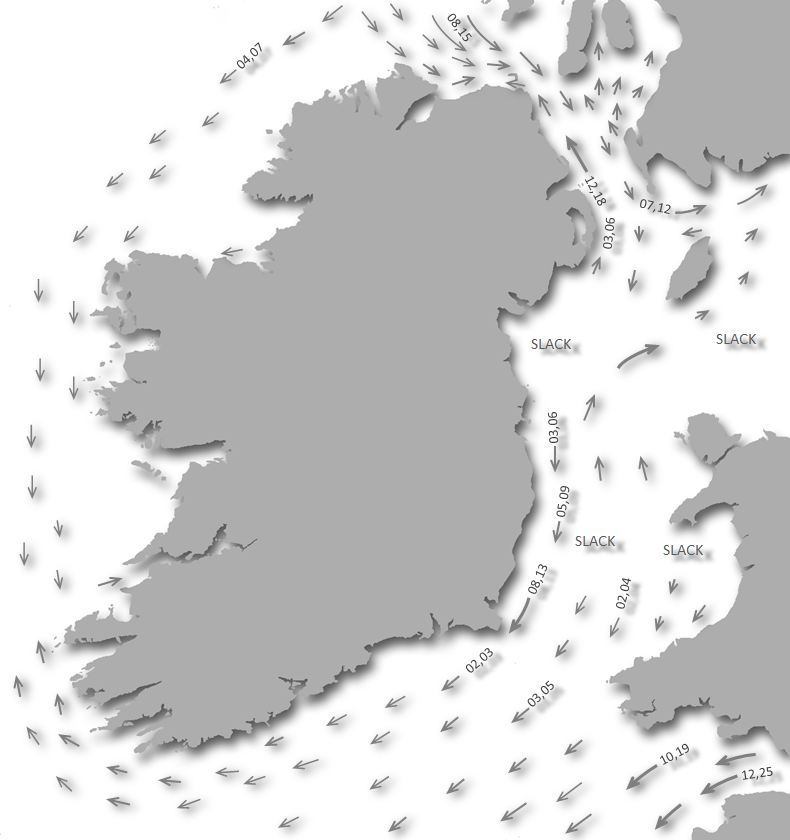
Offshore details for vessels approaching Strangford Lough from the north are available in northeast Ireland’s Coastal Overview for Malin Head to Strangford Lough  . Details for vessels approaching from the south are available in eastern Ireland’s Coastal Overview for Strangford Lough to Dublin Bay . Details of the approaches, tidal timings, the run up The Narrows and onward to Killyleagh, on the Lough's western shore, are covered in the Entering and exiting Strangford Lough route description.
. Details for vessels approaching from the south are available in eastern Ireland’s Coastal Overview for Strangford Lough to Dublin Bay . Details of the approaches, tidal timings, the run up The Narrows and onward to Killyleagh, on the Lough's western shore, are covered in the Entering and exiting Strangford Lough route description.Not what you need?
Click the 'Next' and 'Previous' buttons to progress through neighbouring havens in a coastal 'clockwise' or 'anti-clockwise' sequence. Below are the ten nearest havens to East Down Yacht Club for your convenience.
Ten nearest havens by straight line charted distance and bearing:
- Holm Bay - 0.5 nautical miles SSE
- Simmy Island - 0.8 nautical miles NNE
- Don O’Neill Island - 0.9 nautical miles ESE
- Killyleagh - 1 nautical miles S
- Pawle Island - 1.7 nautical miles NNE
- Ringhaddy Sound - 2.1 nautical miles N
- Brandy Bay (North Salt Island) - 2.1 nautical miles S
- Moore’s Point - 2.2 nautical miles SSW
- Jackdaw Island - 2.2 nautical miles SSE
- Between Jackdaw & Chapel Island - 2.3 nautical miles SE
These havens are ordered by straight line charted distance and bearing, and can be reordered by compass direction or coastal sequence:
- Holm Bay - 0.5 miles SSE
- Simmy Island - 0.8 miles NNE
- Don O’Neill Island - 0.9 miles ESE
- Killyleagh - 1 miles S
- Pawle Island - 1.7 miles NNE
- Ringhaddy Sound - 2.1 miles N
- Brandy Bay (North Salt Island) - 2.1 miles S
- Moore’s Point - 2.2 miles SSW
- Jackdaw Island - 2.2 miles SSE
- Between Jackdaw & Chapel Island - 2.3 miles SE


What's the story here?
 East Down Yacht Club and the deep water pool
Image: Michael Harpur
East Down Yacht Club is located on the western shore of Strangford Lough, 2½ miles northwest of where it opens from The Narrows and 1 mile northward of Killyleagh. It is located on a 9-acre site, which includes a modern clubhouse and pontoon, on the shore to the west of Island Taggart. Opposite the club is Island Taggart, the first major island outside the Quoile estuary and one of the Lough's largest. In the channel between the two is a deep water inner pool or 'Dorn', the local expression for this type of bay, where it is possible to anchor, pick up visitors’ moorings and, possibly, berth alongside the club pontoon.
 Island Taggart, East Down Yacht Club the approach channel and Holm Bay
Image: Michael Harpur
Best entered and exited from Holm Bay, to the south of Island Taggart, the inner pool is tidal restricted. It has a minimum of 2 metres at LWS, as does the pontoon, but the access channel will have as little as 0.5 metres LAT. Vessels carrying any draught should make approaches in the latter part of the flood, ±3 hours of HW. With MHWS 3.6 metres and MHWN 3.1 metres, this should accommodate most leisure vessels' draught.
 The East Down Yacht Club pontoon
Image: Michael Harpur
East Down Yacht Club welcomes visitors and may be contacted by
 +44 28 4482 8375,
  edycsec@gmail.com and via a contact form on their website https://edyc.co.uk/
  . Their pontoon is generally available except during events when facilities may be overrun. There is no charge for using the pontoons but a donation to the club is much appreciated if possible.
 How to get in?
 East Down Yacht Club and Island Taggart
Image: Michael Harpur
 Details of the approaches, tidal timings, the run up The Narrows and onward to Killyleagh, on the Lough's western shore, are covered in the Entering and exiting Strangford Lough route description. East Down Yacht Club is best approached as directed from Holm Bay
  which also may be used may for vessels approaching from the Killyleagh and the Quoile River.
_leading_off_holm_bay.jpg) The entrance channel (top right) leading off Holm Bay
The entrance channel (top right) leading off Holm BayImage: Michael Harpur
There are three clearly marked visitors’ moorings in Holm Bay, locally pronounced Home Bay, and this is an ideal location to await a flood tide to enter the inner pool. It is also possible to approach through the channels north and south of Don O’Neill Island
as directed in its entry. The pole off the shoreline
Image: Michael Harpur
 From the Holm Bay Initial Fix proceed into the bay and with a sufficient rise of tide enter into the channel between the shore and Island Taggart. Poles mark either side of the entrance points with the best water being on the island side of the channel.
  The pole off the Island Taggart
Image: Michael Harpur
Following the line of moorings, shoal draft and bilge keel vessels in the approach channel and then the deeper draught vessels in the inner pool, and may be used to indicate the central channel.
 The line of moorings serve to mark the approach channel and the pool
Image: Michael Harpur
The deep water pool commences about 150 metres before the pontoon and lies off its head. A line of two to three visitor moorings mark the mid-channel position.  The darker waters of the pool inside Island Taggart visible from the air
Image: Michael Harpur
Holding in the inner pool is very good but due to strong currents that can attain up to 1.5 knots through the anchorage, most boaters pick up moorings here. Alternatively, come alongside the pontoon by arrangement with the club.

 The channel continuing northward around Island Taggart
Image: Michael Harpur
It is possible to follow the channel northward on a high and rising tide in order to pass out the north side of Island Taggart to the Simmy Island
anchorage. Assume a 0.1 LAT, take it steady, keeping a sharp eye too the sounder.  Dodd's Island and Island Taggart continuing north to pass around the island
Image: Michael Harpur
Follow the line of the moorings for the best water to the shallowest point which is at about the midway point along Island Taggart close southward of the small Dodd's Island that lies off of the mainland. Steer to pass midway between Dodd's Island and Island Taggart continuing north by northeastward.
Why visit here?
The principal draw to this anchorage is of course East Down Yacht Club but the real gem is its adjacent sheltering Island Taggart. Island Taggart formed from two drumlins
Image: Michael Harpur
Island Taggart takes its name from the Gaelic 'Inis Mhic tSagairt' meaning McIntaggart’s Island using a shortening of (Mac)Taggart surname. McIntaggart is a Scottish surname meaning 'son of the priest' which, of itself, indicates that the rule of celibacy was not strictly enforced upon the clergy of the early church. The island was inhabited as early as the late Mesolithic period as two worked flint flakes recently discovered on its beach were dated to between 5,500 BC and 4,500 BC. This would be entirely fitting as there is ample evidence of Mesolithic activity at many Strangford Lough locations, with its raised beaches being a rich source of Mesolithic material.
 The north end of Island Taggart
Image: Michael Harpur
Most remarkably for an Island, although one of the largest islands in Strangford Lough, approximately 1.6KM long (north/south) by 0.4 KM wide (east/west) and with a total area of around 85 acres, it was recorded as having peak population of 23 in 1821. The islanders made a living by farming and kelp production. In the late 18th and early 19th centuries, kelp production was a thriving economy along the Irish seaboard. Kelp, when burned to ashes, was a source of impure soda which was required by the industries of the time such as glass, soap and linen production. Evidence of its kelp processing remains to this day in an open circular stone kiln, thought to have been used for the kelp burning, located on the southern tip of the island. Close to the northeastern bay is a second larger kiln which is very well preserved with a stone corbelled roof.
 The islands old field boundaries are marked today by its trees
Image: Michael Harpur
Island Taggart was intensively farmed throughout this time with the ruin of its principal stone-built, slate-roofed farmhouse on the central ridge of the island surrounded by several stone farm buildings. There is an old orchard behind the farmhouse and a well, one of at least two stone wells on the island, located nearby just to the side of the sunken lane which runs from the eastern shore up to the farm. The field system south of the farmstead is marked by the copse of oak, beech, ash, Scots pine, sycamore, elm and alder trees. The island's last resident, Mr David (Davey) Calvert, left the island in 1967. This was one year after East Down Yacht Club purchased the lands on the opposite shoreline to thereafter establish the sailing club which hadn't existed before this.
 Land on the shore or the bight opposite the club
Image: Michael Harpur
The National Trust bought the island in 1985. It welcomes visitors today and preserves the two small farms that existed here in the past. The island's length and the height of its two drumlins make it particularly attractive in the southern half of Strangford Lough. A host of wildlife such as badgers, foxes and otters now reside on Taggart, and camping is also permitted.
 The welcoming East Down Yacht Club immediately ashore
Image: Michael Harpur
From a boating perspective, this anchorage is very attractive being in a quiet picturesque location that offers complete protection with all the resources of welcoming East Down Yacht Club immediately to hand. All this, and with almost all other requirements can be met by Killyleagh, the largest town on the shores of the Lough just one mile away, make it a must-visit location for Lough cruisers.
What facilities are available?
‘East Down Yacht Club’ has good facilities for both cruising and racing boats with a nine acre site, that includes a modern clubhouse, a caravan and camping park, car parking, a boat-park and a slipway. Fresh water is available on the pontoon but no power. There are showers and a well stocked bar at the Yacht Club which is well supported on race nights and at weekends and has a welcoming relaxed atmosphere. The club has the facility to haul out yachts of up to 10 metres.The club is a mile outside of Killyleagh, the largest town on the Lough, where a visitor can find an alternative hotel and more pubs. With a population of almost two and half thousand the town has good shopping plus a basic chandlery, garage, bank, taxis and buses. A five tonnes crane is available for hire on the quay and some boat and rigging repairs can be addressed here. It is situated on the A22 road to Downpatrick which is a sizeable town that serves as the commercial and administrative centre for the locality.
Any security concerns?
Never a problem known to have occurred at East Down Yacht Club.With thanks to:
Brian Crawford, local Strangford Lough boatman of many decades. eOceanic would like to thank Quoile Yacht Club for hosting our survey boat during the survey of Strangford Lough.
East Down Yacht Club introductory video
About East Down Yacht Club
The principal draw to this anchorage is of course East Down Yacht Club but the real gem is its adjacent sheltering Island Taggart.
Island Taggart formed from two drumlinsImage: Michael Harpur
Island Taggart takes its name from the Gaelic 'Inis Mhic tSagairt' meaning McIntaggart’s Island using a shortening of (Mac)Taggart surname. McIntaggart is a Scottish surname meaning 'son of the priest' which, of itself, indicates that the rule of celibacy was not strictly enforced upon the clergy of the early church. The island was inhabited as early as the late Mesolithic period as two worked flint flakes recently discovered on its beach were dated to between 5,500 BC and 4,500 BC. This would be entirely fitting as there is ample evidence of Mesolithic activity at many Strangford Lough locations, with its raised beaches being a rich source of Mesolithic material.
The north end of Island TaggartImage: Michael Harpur
Most remarkably for an Island, although one of the largest islands in Strangford Lough, approximately 1.6KM long (north/south) by 0.4 KM wide (east/west) and with a total area of around 85 acres, it was recorded as having peak population of 23 in 1821. The islanders made a living by farming and kelp production. In the late 18th and early 19th centuries, kelp production was a thriving economy along the Irish seaboard. Kelp, when burned to ashes, was a source of impure soda which was required by the industries of the time such as glass, soap and linen production. Evidence of its kelp processing remains to this day in an open circular stone kiln, thought to have been used for the kelp burning, located on the southern tip of the island. Close to the northeastern bay is a second larger kiln which is very well preserved with a stone corbelled roof.
The islands old field boundaries are marked today by its treesImage: Michael Harpur
Island Taggart was intensively farmed throughout this time with the ruin of its principal stone-built, slate-roofed farmhouse on the central ridge of the island surrounded by several stone farm buildings. There is an old orchard behind the farmhouse and a well, one of at least two stone wells on the island, located nearby just to the side of the sunken lane which runs from the eastern shore up to the farm. The field system south of the farmstead is marked by the copse of oak, beech, ash, Scots pine, sycamore, elm and alder trees. The island's last resident, Mr David (Davey) Calvert, left the island in 1967. This was one year after East Down Yacht Club purchased the lands on the opposite shoreline to thereafter establish the sailing club which hadn't existed before this.
Land on the shore or the bight opposite the clubImage: Michael Harpur
The National Trust bought the island in 1985. It welcomes visitors today and preserves the two small farms that existed here in the past. The island's length and the height of its two drumlins make it particularly attractive in the southern half of Strangford Lough. A host of wildlife such as badgers, foxes and otters now reside on Taggart, and camping is also permitted.
The welcoming East Down Yacht Club immediately ashoreImage: Michael Harpur
From a boating perspective, this anchorage is very attractive being in a quiet picturesque location that offers complete protection with all the resources of welcoming East Down Yacht Club immediately to hand. All this, and with almost all other requirements can be met by Killyleagh, the largest town on the shores of the Lough just one mile away, make it a must-visit location for Lough cruisers.
Other options in this area
Click the 'Next' and 'Previous' buttons to progress through neighbouring havens in a coastal 'clockwise' or 'anti-clockwise' sequence. Alternatively here are the ten nearest havens available in picture view:
Coastal clockwise:
Don O’Neill Island - 0.5 miles ESEHolm Bay - 0.3 miles SSE
Killyleagh - 0.6 miles S
Moore’s Point - 1.4 miles SSW
Quoile - 1.8 miles SSW
Coastal anti-clockwise:
Simmy Island - 0.5 miles NNEPawle Island - 1 miles NNE
Ringhaddy Sound - 1.3 miles N
White Rock Bay - 2.6 miles N
Ballydorn and Down Cruising Club - 2.9 miles N
Navigational pictures
These additional images feature in the 'How to get in' section of our detailed view for East Down Yacht Club.


| Detail view | Off |
| Picture view | On |
East Down Yacht Club introductory video
 A photograph is worth a thousand words. We are always looking for bright sunny photographs that show this haven and its identifiable features at its best. If you have some images that we could use please upload them here. All we need to know is how you would like to be credited for your work and a brief description of the image if it is not readily apparent. If you would like us to add a hyperlink from the image that goes back to your site please include the desired link and we will be delighted to that for you.
Add your review or comment:
Please log in to leave a review of this haven.
Please note eOceanic makes no guarantee of the validity of this information, we have not visited this haven and do not have first-hand experience to qualify the data. Although the contributors are vetted by peer review as practised authorities, they are in no way, whatsoever, responsible for the accuracy of their contributions. It is essential that you thoroughly check the accuracy and suitability for your vessel of any waypoints offered in any context plus the precision of your GPS. Any data provided on this page is entirely used at your own risk and you must read our legal page if you view data on this site. Free to use sea charts courtesy of Navionics.